Business automation platforms split into three classes that buyers constantly compare against each other, usually without realising they solve different problems. iPaaS and workflow platforms (Zapier, Make, n8n at self-serve scale; Workato and Boomi at enterprise scale) move data between cloud apps through APIs. RPA platforms (UiPath, Automation Anywhere) drive software through its screens, built for legacy systems with no API. Suite-native automation (Microsoft Power Automate, Atlassian Automation) lives inside an ecosystem you already pay for and works best when your processes stay inside it. This report positions all nine platforms in one place: what each is actually for, how each prices, where each scales and which class a mid-market business should evaluate first.
I am Prem Patel, founder of Nex Automations, an AI systems studio. I hold the Make Level 5 Expert and Zapier Certified Professional certifications, and Nex Automations is listed in both the official Make partner directory and the Zapier Solution Partner directory, the only company in India in both as of August 2026. We have shipped 1,200+ automation systems for 210+ clients, most of them in exactly the class this report says most businesses should start with. The facts below are stated with dates so you can check every one.
The three classes, and the test that sorts them
One question sorts almost every automation project into the right class: where does the work live?
- The work lives in cloud apps with APIs (CRM, e-commerce, email, sheets, accounting SaaS): iPaaS / workflow class. APIs are cheaper, faster and more reliable than any alternative.
- The work lives in software with no usable API (legacy ERP, desktop apps, government portals, mainframe screens): RPA class. Driving the screen is the only option left, and you pay for that in licence cost and bot maintenance.
- The work starts and ends inside one vendor's suite (everything in Microsoft 365, or everything in Jira): suite-native class first, because it is already included in what you pay and inherits the suite's permissions.
Buying RPA for API-able work is the most common overspend we see in audits: five-figure licences doing what a $20-a-month scenario does better. The reverse mistake, forcing an iPaaS to click through a legacy ERP screen, simply does not work.
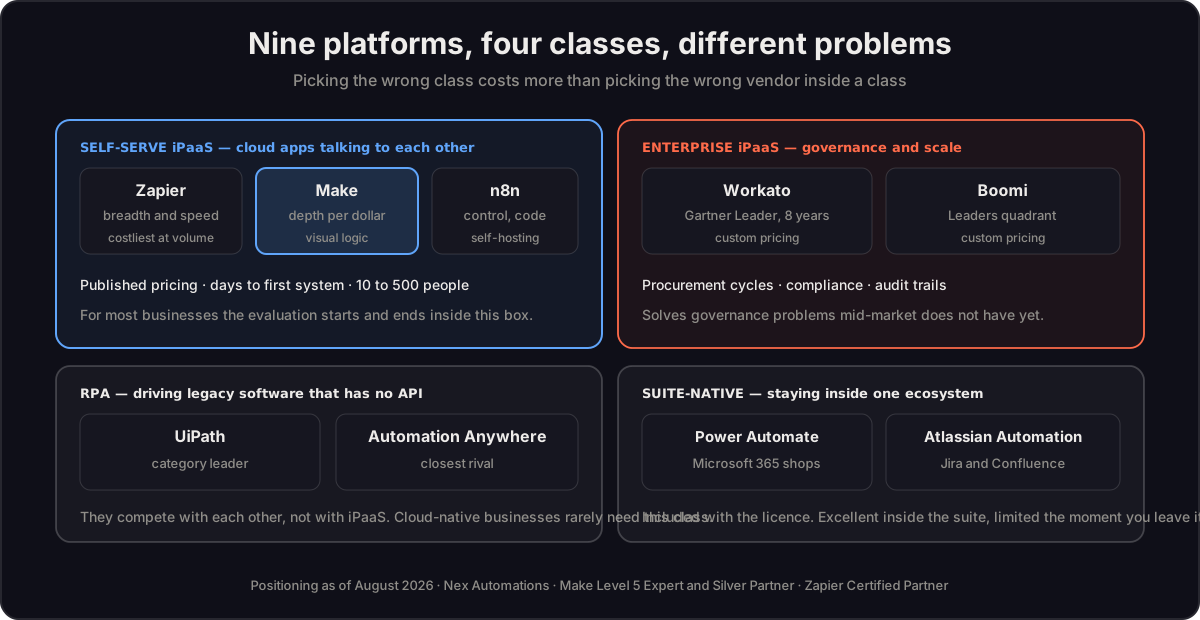
The nine platforms, one fact block each
Zapier
Make
n8n
Workato
Boomi
Microsoft Power Automate
UiPath
Automation Anywhere
Atlassian Automation
Scalability and high-volume workloads: how the classes actually differ
For API-based work, high volume is a pricing question before it is a technical one. All the iPaaS platforms handle tens of thousands of runs a month technically; what changes is the bill. Per-task billing (Zapier) grows linearly and punishes volume. Per-operation billing (Make) is typically several times cheaper for the same workload at SMB and mid-market scale. Self-hosted n8n removes the per-run cost entirely and moves the cost into your infrastructure and team. Enterprise iPaaS (Workato, Boomi) prices on platform value, not runs, which is why it only makes sense above a certain organisational size.
For screen-based work, scale is a maintenance question. Every UI change can break a bot, so RPA at high volume is as much an operations discipline as a licence: this is what the UiPath and Automation Anywhere orchestration tooling exists for, and why RPA total cost of ownership stays high even when licences are negotiated down.
The practical ceiling most mid-market buyers actually hit is neither: it is workflow complexity. Past a certain point the constraint is error handling, observability and ownership of the system, which is a build-quality question, not a platform-class question.
What each pricing model rewards
| Platform | Model | Published? | Rewards | Punishes |
|---|---|---|---|---|
| Zapier | Per task | Yes | Low volume, fast starts | High volume |
| Make | Per operation | Yes | Volume efficiency | Nothing at SMB scale; enterprise governance needs |
| n8n | Free self-host / cloud plans | Yes | Technical teams, unlimited volume | Teams with nobody to own it |
| Workato | Custom annual | No | Enterprise governance | Small teams (not its market) |
| Boomi | Custom, connector-based | No | Systems-of-record integration | Lightweight workflow needs |
| Power Automate | Per user + add-ons | Yes | All-Microsoft estates | Cross-suite workflows, RPA licensing clarity |
| UiPath | Per robot / capability | Partly | Legacy-system volume | API-able work (massive overspend) |
| Automation Anywhere | Custom enterprise | No | Competitive RPA bids | Same as UiPath |
| Atlassian | Included, plan limits | Yes | In-suite rules | Anything outside Atlassian |
The mid-market answer, stated plainly
For businesses between roughly 10 and 500 people whose work lives in cloud apps, the evaluation should start and usually end in the self-serve iPaaS class: Make, Zapier or n8n. The enterprise platforms solve governance problems mid-market companies do not have yet, at prices built for companies that do. The RPA platforms solve a legacy-software problem most cloud-native businesses simply do not face. We wrote the full three-way comparison with verified pricing math for exactly this decision, and the broader iPaaS market landscape covers the enterprise and mid-market iPaaS tiers vendor by vendor.
Where the three sit, in one line each: Zapier is breadth and speed, Make is depth per dollar, n8n is control. All three now carry serious AI-agent capability, which increasingly matters more than the connector count: the AI agent cost breakdown covers what that layer actually costs to build and run, and the 12 AI agent use cases that hold up in production shows where it earns its keep.
For regulated industries, the honest note is that class matters less than deployment: self-hosted n8n keeps data on your infrastructure, enterprise iPaaS offers compliance certifications and audit trails, and suite-native tools inherit the suite's compliance posture. The platform pitch matters less than who configures the error handling and access control.
FAQ
Q: What is the difference between iPaaS and RPA? A: iPaaS platforms move data between applications through their APIs. RPA platforms operate software through its user interface, the way a human would, for systems with no usable API. iPaaS is cheaper and more reliable where APIs exist; RPA exists for where they do not.
Q: Which automation platform is cheapest at high volume? A: Self-hosted n8n has no per-run cost at all, making it the cheapest at volume for teams that can run it. Among managed platforms, per-operation pricing (Make) beats per-task pricing (Zapier) at volume by a wide margin, often several times over for the same workload.
Q: Do I need UiPath or is Zapier enough? A: If the applications in your workflow have APIs or exist in the 9,000+ Zapier / 3,000+ Make integration directories, you do not need RPA, and enterprise RPA licensing would be a large overspend. UiPath and Automation Anywhere earn their cost where work runs through legacy screens with no API.
Q: Is Power Automate better than Zapier or Make? A: Inside an all-Microsoft estate, Power Automate is usually the right first evaluation because it is bundled and inherits Microsoft 365 permissions. For workflows that span suites and SaaS tools, dedicated iPaaS platforms connect more, with clearer per-workflow costs.
Q: Which platforms lead the Gartner iPaaS Magic Quadrant? A: In the 2025 iPaaS MQ, Workato led for the eighth consecutive year, with Boomi and Informatica also in the Leaders quadrant. MuleSoft was demoted from Leader to Challenger. Zapier entered as a Niche Player for the first time. Make and n8n are not in the MQ, which measures enterprise iPaaS, not SMB value.
Q: What should a mid-market company evaluate first? A: Start with the self-serve iPaaS class (Make, Zapier, n8n) and only escalate to enterprise iPaaS for governance requirements or to RPA for legacy screen work. Most mid-market automation needs are covered in the self-serve class at a fraction of enterprise cost.
Deciding between these classes for your own operations? Book a free consult and you will get a platform recommendation from a team certified on more than one of them, including when the honest answer is the suite tool you already pay for.